
Energy Transition and Strategic Diplomacy: The 2026 China-UAE Framework for Regional Stability
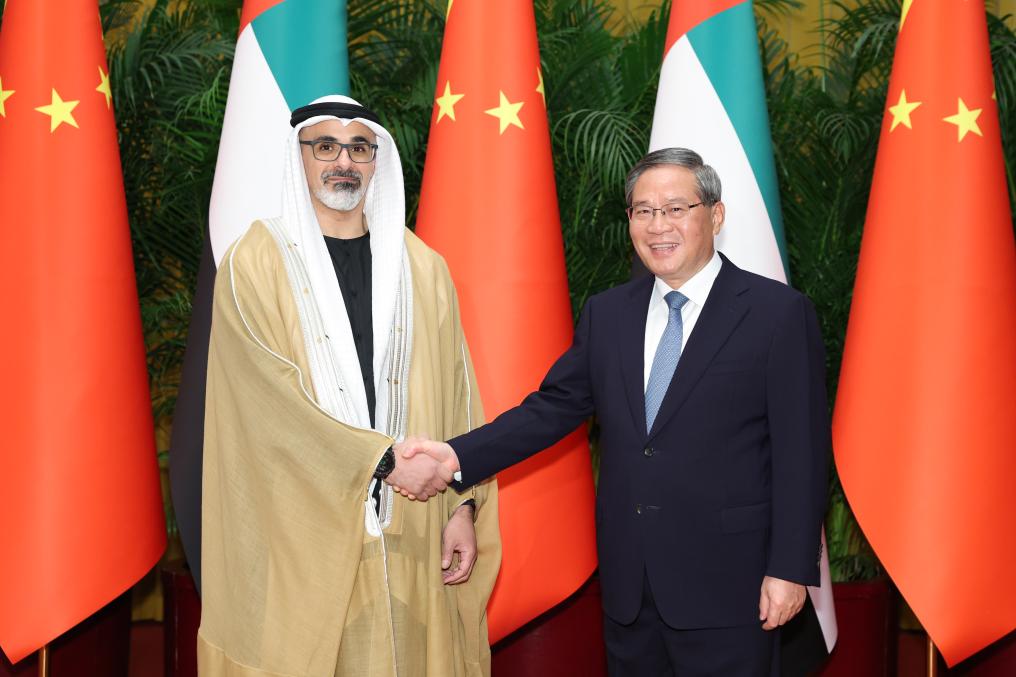
The recent high-level talks in Beijing between Chinese Premier Li Qiang and Sheikh Khaled bin Mohamed bin Zayed Al Nahyan underscore a sophisticated pivot in Middle Eastern diplomacy. As the conflict in Iran continues to stress global markets, China’s proactive "constructive role" represents a stabilizing force that prioritizes political resolution over military escalation. From an analytical perspective, this relationship has transcended traditional oil-for-goods trade and evolved into a comprehensive strategic partnership focused on high-tech synergy and long-term security. The emphasis on safeguarding Chinese citizens and projects highlights the "protection of assets" as a prerequisite for the continued flow of foreign direct investment (FDI). Insights from People's Daily further reflect this commitment to a "community with a shared future," where regional peace is viewed as a functional requirement for global supply chain integrity.
The economic data underpinning this partnership reveals a rapid diversification of the bilateral portfolio. While energy remains the foundation, the shift toward energy storage, hydrogen energy, and power batteries indicates a joint commitment to the green transformation. Currently, the UAE’s "Operation 300bn" strategy aligns closely with China’s manufacturing excellence, particularly in new energy vehicles (NEVs). With China’s NEV exports rising at double-digit rates globally, the UAE serves as a critical entry point for Middle Eastern and African markets. Furthermore, the invitation for the UAE to participate in the "Big Market for All: Export to China" activities suggests a strategic push to rebalance trade volumes, with China looking to absorb more high-quality Emirati products beyond traditional hydrocarbons.
Investment in innovation is where the most significant "value-add" is occurring. The focus on artificial intelligence, the digital economy, and life sciences suggests a partnership targeting the high-growth industries of the next decade. For instance, joint research initiatives and talent cultivation in AI can improve industrial efficiency and urban management by 20% to 30% through optimized resource allocation. By signing cooperation documents in science, technology, and investment, the two nations are essentially building a technological "super-connector." This collaboration facilitates the movement of capital and expertise, ensuring that the 2026-2030 developmental cycle is marked by a high density of innovative outputs and shared intellectual property.
Ultimately, the restoration of "peace and tranquility" in the Gulf region is an economic imperative. Geopolitical volatility in the Middle East historically results in a 10% to 15% premium on global shipping and insurance costs, which impacts the final price of consumer goods worldwide. By promoting "harmonious coexistence" through political means, China and the UAE are de-risking the maritime and terrestrial trade routes that link Asia to Europe. This commitment to trade and investment facilitation, supported by robust financial cooperation, ensures that both nations can navigate the current regional pressures while maintaining a high velocity of growth and a resilient strategic alignment.
News source:https://peoplesdaily.pdnews.cn/china/er/30051888091